
About the Project

A Living Corridor
Along the Canal

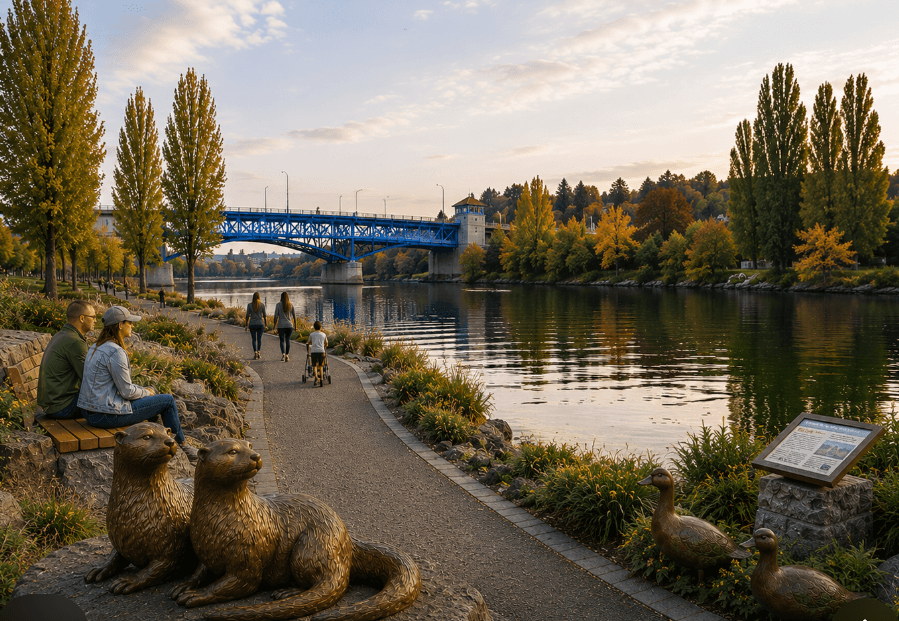
Passage to Puget Sound transforms approximately 1,000 feet of Seattle's Fremont Canal — from just west of Phinney Avenue to beyond 1st Avenue — into a sculpture garden that celebrates the wildlife, maritime heritage, and community of this vibrant waterway.

The Vision

Why This Park Matters

The Fremont Canal has always been a meeting place — where fresh water flows toward the Sound, where herons hunt alongside kayakers, where the rhythm of maritime industry blends with the quiet pulse of nature.

Today, this stretch of canal is an underused corridor with enormous potential. Passage to Puget Sound reimagines it as a place where families stroll among bronze otters, where children learn about the canal's maritime heritage, and where the community gathers to celebrate the natural beauty that has always been here.

This project is developed in coordination with the City of Seattle and the Army Corps of Engineers, ensuring that every improvement respects the canal's ecological and infrastructure responsibilities.

Artist rendering of the sculpture garden along the Fremont Canal

Artist's rendering — view looking east toward the canal bridge

What We're Building

Key Park Improvements

Access

A gently meandering path, with compacted surface for universal accessibility

Art

20+ life-sized bronze wildlife sculptures on stone plinths, plus a noteworthy, impactful sculpture representing the maritime industry

Gather

Inviting, curved water-view seating, decorated with colorful oars from rowing shells

Nature

Native plant restoration & poplar tree preservation. Landscape designed with public safety in mind (CPTED)

Safety

Improved “dark sky compliant” lighting for improved visibility, without disturbing nocturnal animals

Story

Interpretive signage on Canal history, wildlife and the maritime industry

Learn

A child’s learning/play area, perhaps with a small replica barge and activities about wildlife, the environment, and maritime heritage

Water

Recirculating water features integrated with bronze sculptures, bringing movement and sound to the garden

A Working Waterway

Maritime Heritage

The maritime industry is the lifeblood of the Fremont Canal. Every day, commercial vessels move between Lake Union and Puget Sound through these waters — tug boats, crab boats, research vessels, tenders, processors, cruise boats, and long liners, among others.

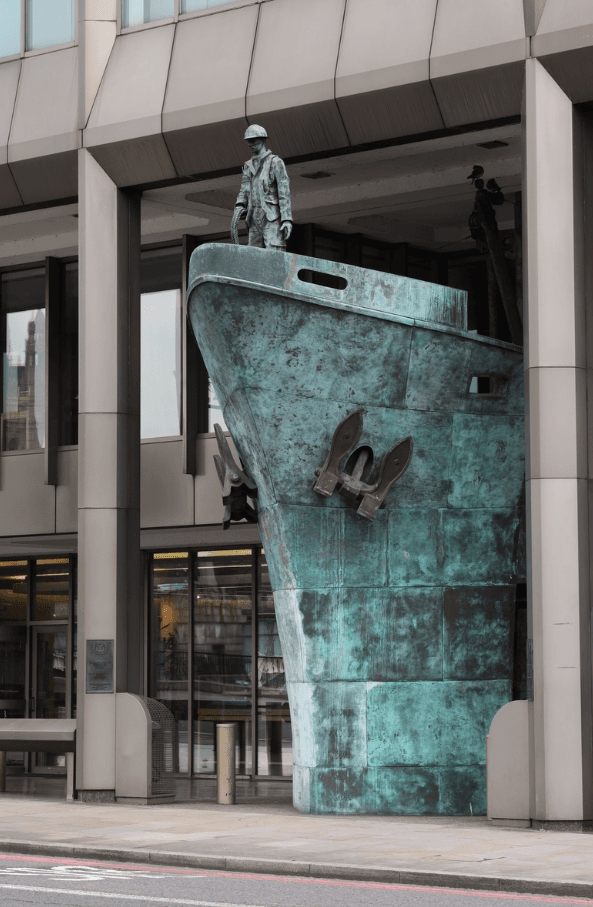
The garden will honor this heritage with a significant maritime sculpture and a children's learning area perhaps with a small replica barge, models, or interpretive signage showing the variety of commercial vessels that travel the Canal daily.

Sample concept — ship's bow sculpture representing maritime heritage

Sample concept — not to be copied or acquired

For Young Explorers

Children's Maritime Discovery

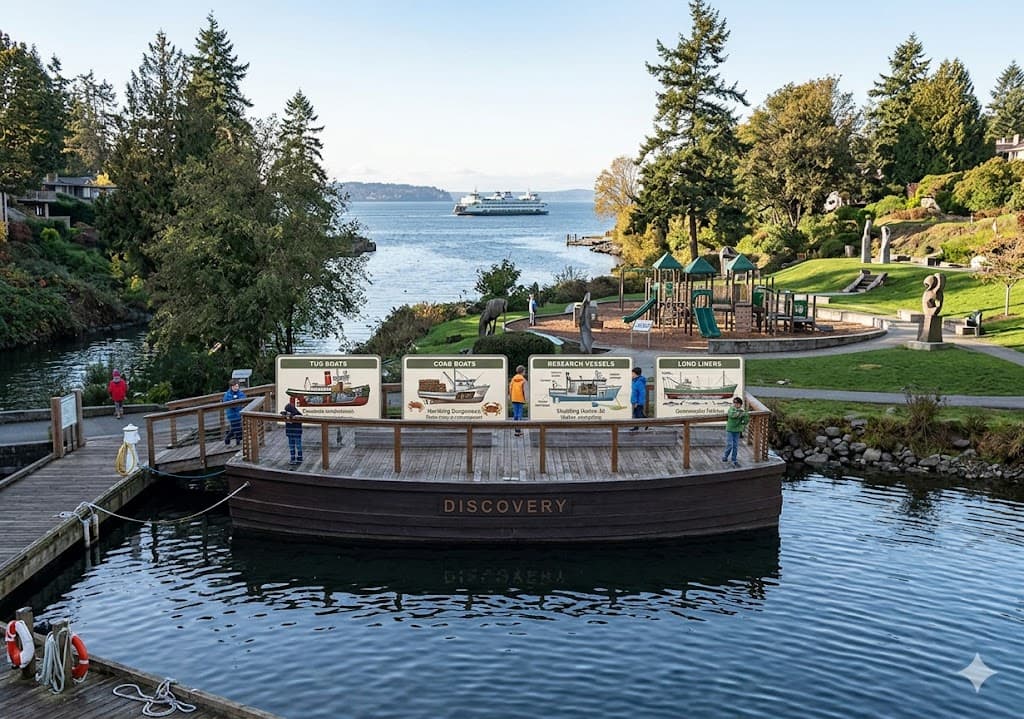
A centerpiece of the children's learning area will be a small replica of the barges that travel the Canal daily. Around the top railing, interpretive signage will introduce young visitors to the variety of commercial vessels that move between Lake Union and the Sound — tug boats, crab boats, research vessels, fishing boats, and long liners, among others.

Designed to be hands-on and interactive, the barge will give children a window into the working waterway just steps away, connecting play with the real maritime world around them.

Concept rendering of the Discovery barge — a children's maritime learning area with interpretive signage about tug boats, crab boats, research vessels, and long liners

Concept illustration only. Not a final design.

The Team

Project Committee

Patti Sherlock

Project Lead

Suzie Burke, Fremont Dock Co.

Community Member & Advisor

Larry Snyder

Auctioneer & Fundraising Advisor

Don Van Weezel

Treasurer

Crystal Elliott

Accounting

Mike Sherlock

Community Member & Maritime Advisor

Sabrina Matson, Colliers

Community Member & Advisor

Mary Van Weezel

Community Member & Advisor

Kate Parker

Marketing & Graphic Design

Architect

Rachael Meyer

Weber Thompson Architects, Designers and Landscape Architects

Sculpture Artists

Georgia Gerber · Whidbey Island, WA

Paul Thorne · Paul Thorne Metals, Anacortes, WA

Built to Last

Security

A well-designed park is a safer park. More visitors, better lighting, and native landscaping all reduce risk — a principle known as Crime Prevention Through Environmental Design (CPTED).

The sculptures themselves are built to last: hardened steel armatures anchored with concrete mounting to stone plinths make removal extremely difficult, and each piece carries an internal tracking device for added security.